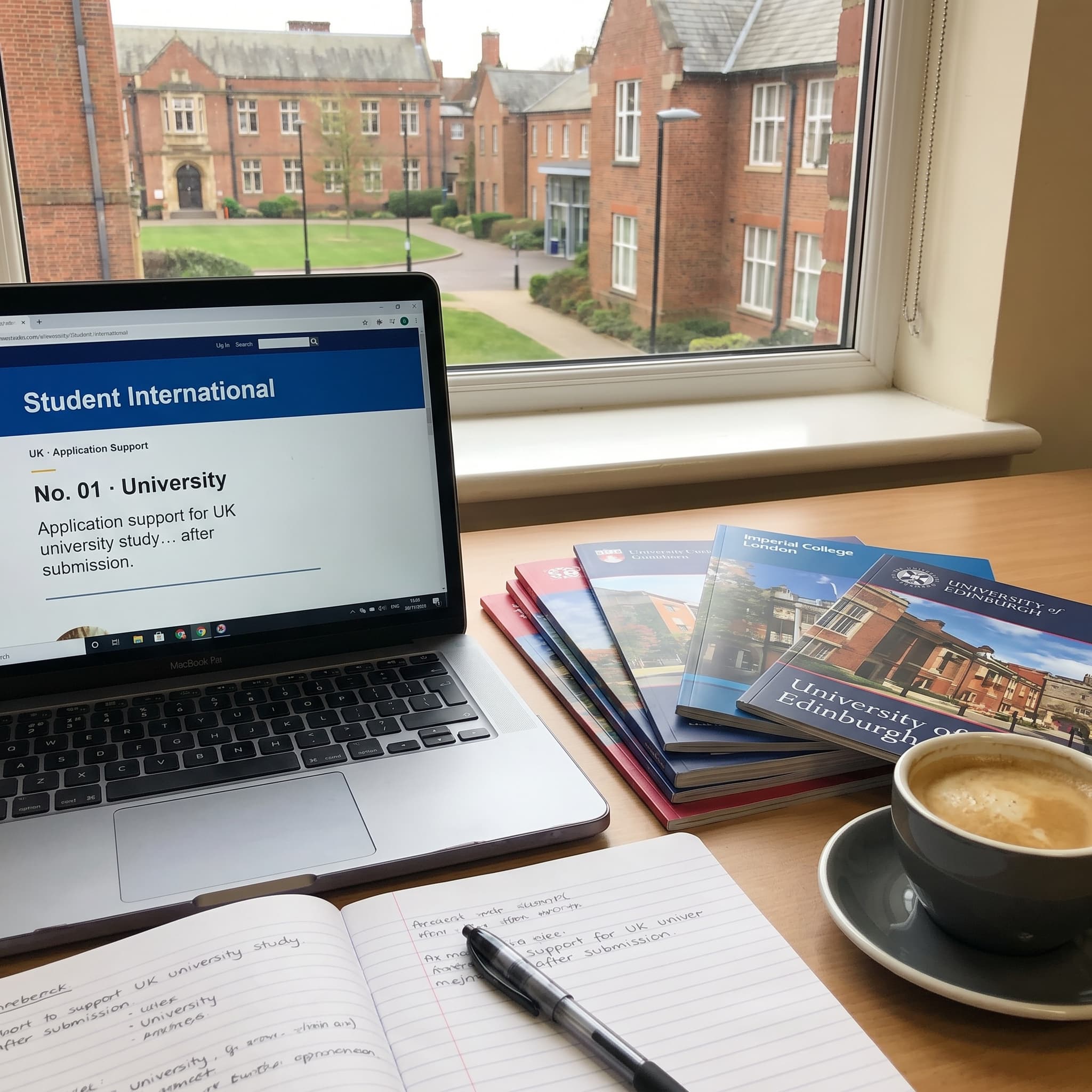
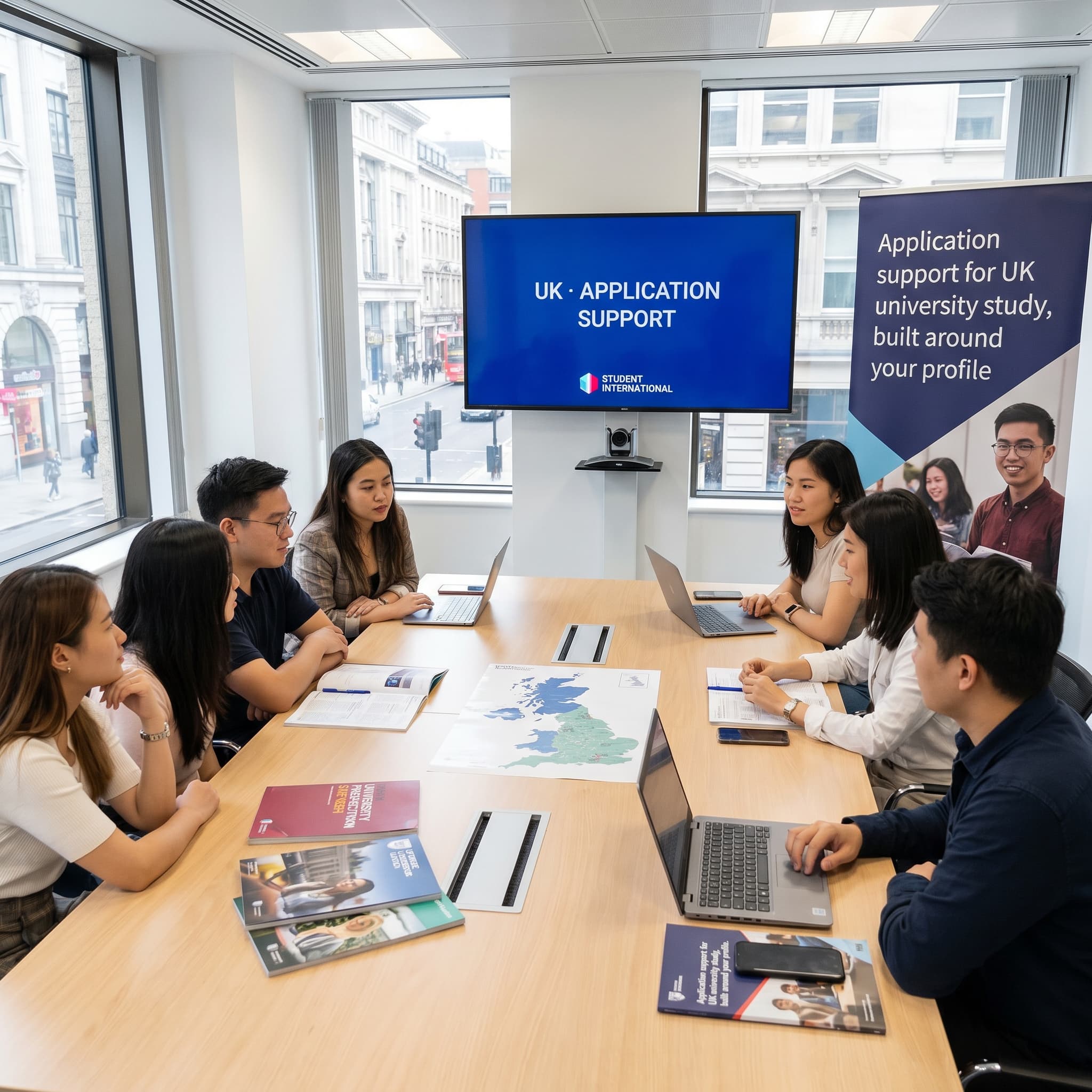
Student International
Talk through your options
Thailand · UK · Applications

UK application support, made for students in Thailand.

Applying to UK university from Thailand is more than choosing familiar names. The UCAS calendar, qualification fit, references from Thai schools or international schools, family funding confirmation, and the baht-to-GBP budget all need to align. We help students in Thailand organise these decisions so the UK application stage feels realistic, structured, and easier to manage.

The UK application process can feel different from the route Thai students know through their own school system. UK universities look at academic evidence, course fit, written materials, references, and readiness for the programme — not headline rankings alone. Structured support helps a Thai applicant understand how Mathayom 6, A Level, IB, AP, GED where accepted, international school qualifications, foundation programmes, vocational diplomas, or degree routes relate to UK entry requirements, compare courses by content rather than by title, and manage UCAS or direct applications alongside school exams or language preparation.

This service is useful for Thai students applying for UK undergraduate study, applicants comparing UCAS choices, students preparing personal statements, references, portfolios, or interviews, and applicants weighing the UK against another destination. It also helps families in Thailand who want clearer information on baht budget, safety, timing, and long-term value, so the application stage feels realistic and easier to manage.

How we support UK applications from Thailand

Five parts of a UK application worth getting right.

We focus on the decisions and documents that make a Thai applicant's UK case stronger, easier to manage, and honest about who the student is.

Profile and goal review.
Profile

Profile and goal review.

We start with your Thai academic background, subject interests, current qualifications, predicted or achieved results, baht budget, preferred UK locations, and long-term goals. The aim is to set a realistic UK direction before any shortlist is built.

Course and university shortlisting.
Shortlist

Course and university shortlisting.

We compare UK course content, entry requirements for Thai qualifications, teaching style, student support, location, total cost in THB, and progression. The shortlist holds options that are ambitious, realistic, and sensible — read by content, not by reputation alone.

UCAS and application route guidance.
Route

UCAS and application route guidance.

Where UCAS applies, we walk through the structure of the application, course choices, personal statement, reference, and timeline. Where direct university or postgraduate applications are relevant, we organise those requirements separately.

Written material support.
Documents

Written material support.

We guide personal statements, essays, CVs, portfolios, references from Thai schools or international schools, and other supporting documents. The aim is a coherent case shaped by your Thai pathway, not a generic template.

Interview and offer support.
Offers

Interview and offer support.

Some UK courses involve interviews, portfolios, tests, or extra tasks; we help you prepare. When offers arrive, we compare conditions, baht cost, location, and support before deposits, funding confirmation, visa preparation, and travel planning.

Thai qualifications to UK entry routes

How a Thai profile reads at UK admissions.

UK universities apply their own published entry requirements to Thai qualifications, and admissions decisions rest with each university. The list below is planning context based on common reading at the time of writing — current cycle UCAS rules, deadlines, and course-specific requirements should always be verified when the application is being prepared.

For sponsored applicants under Thai government scholarships, OCSC-related routes where current rules allow, or employer-linked funding, sponsor confirmation usually shapes the order of UCAS submission and offer acceptance. Self-funded applicants typically follow a different sequence.

  • Mathayom 6 — Thai school completion results around February or March are typically read against UK foundation or pathway entry rather than direct undergraduate admission. Most UK universities expect a foundation year, A Level, IB, or equivalent alongside Mathayom 6 for direct entry.
  • A Level — results in August read directly against UK A Level entry requirements; usually submitted with predicted grades through UCAS during the year of study. Thai international school A Level students follow the same UCAS timeline as UK-based applicants.
  • IB — total points and higher-level scores in July typically read directly against UK IB entry requirements; usually submitted with predicted grades through UCAS.
  • AP — scores available in July may be accepted by some UK universities as part of a US-curriculum application, often alongside a high school diploma and GPA. Acceptance varies by institution and course.
  • GED where accepted — some UK universities accept GED alongside additional qualifications or a foundation pathway. Direct entry from GED alone is uncommon; requirements should be checked course by course.
  • International school routes — students at international schools in Bangkok, Chiang Mai, Phuket, or regional Thailand following A Level, IB, AP, or other international curricula apply through the pathway that matches their qualification, with references from the school.
  • Vocational diploma routes — Thai vocational diplomas may be accepted by some UK universities for foundation or pathway entry, and in some cases for direct entry with credit. The route depends on the awarding body, content, and the UK university's own requirements.
  • Result-to-UCAS deadline timing — Thai school completion (February/March), A Level (August), IB (July), AP (July) against the current-cycle UCAS equal-consideration deadline and the earlier deadline that applies to Oxford and Cambridge and to medicine, dentistry, and veterinary applications. Both deadlines should be verified at the time of applying.
  • Thai school references — UK admissions look for an academic reference that comments on subject readiness, work habits, and predicted attainment. Thai teachers and international school counsellors can write strong UK-style references with a clear brief.
  • Sponsored vs self-funded sequencing — Thai government scholarship holders, OCSC-related route applicants where current rules allow, and employer-sponsored students typically need confirmation before submission or before accepting offers; self-funded applicants follow a different order shaped by family budget and baht-to-GBP planning.
The Student International approach

A grounded route through your UK application from Thailand.

A simple sequence that keeps the UK application stage steady from first conversation to final decision, with the same adviser involved end to end.

  1. 1

    Map your starting point.

    Begin with your current qualification route, your result month, your sponsored or self-funded plan, and your family decision context. The UK plan is built outward from where you actually are, not from a generic profile-and-goals discovery.

  2. 2

    Build a UK application plan.

    We compare UK universities and courses with attention to academic fit for Thai qualifications, entry requirements, baht budget, and timing. The shortlist becomes ambitious where it should be and grounded where it must be.

  3. 3

    Prepare your materials.

    We support personal statements, references from Thai schools or international schools, CVs, portfolios, and any course-specific requirements — so each document explains motivation and suitability through your Thai pathway, without inflation.

  4. 4

    Manage deadlines and plan after offers.

    We keep tasks in the right order through submission, then connect admission decisions to baht-to-GBP tuition planning, UK scholarship guidance from Thailand, UK study visa support from Thailand, accommodation, and Bangkok or regional departure planning.

Should Thai students apply through UCAS or directly to UK universities?

Most UK undergraduate applications from Thailand go through UCAS. Some pathway, foundation, and postgraduate routes apply directly to the university. We help check the right route for each course and university on your shortlist, with current rules verified at the time of applying.

Can predicted grades be used for UK applications from Thailand?

Yes, in many cases. Students still on A Level, IB, or AP programmes at international schools typically apply with predicted grades supported by a school reference, while applicants with achieved results apply with the actual transcript. Mathayom 6 completers and GED holders usually apply with achieved results. The exact requirement varies by course and route.

Can parents or guardians in Thailand be involved in the UK application?

Yes, where it helps. Parents or guardians may be involved in budget, safety, accommodation, sponsor or family funding confirmation, and timing decisions. The process remains centred on the student, with family questions handled openly. See our general application support from Thailand for the wider study abroad view.

What if I do not meet my UK offer conditions from Thailand?

You may need to consider alternatives — clearing routes where eligible, a foundation option, deferral, or another destination plan — depending on the situation. We help think through possible outcomes early so the response feels prepared rather than rushed if results do not match expectations.

How important is the personal statement for a Thai applicant?

The personal statement is one part of a UK application — it sits alongside academic results, references, and any course-specific requirements. A well-prepared statement can explain subject motivation, preparation, and suitability shaped by your Thai pathway, but it should support the wider evidence rather than replace academic readiness.

Begin

Apply to UK universities from Thailand with more clarity.

A first conversation is short and obligation-free. We listen first, then suggest the practical next steps worth focusing on now — so the UK application stage from Thailand feels structured rather than rushed.